by: Jessie Simmons
Category: Civics, Lessons from the Founders
There is a growing habit in modern civic education to flatten history into morality plays. Heroes must be flawless or they must be discarded. Founding documents must either be sacred or fraudulent. In that framework, the Declaration of Independence is increasingly presented not as a radical statement of human liberty, but as a cynical exercise in self-interest, particularly around slavery.
That framing is not just incomplete. It is intellectually lazy.
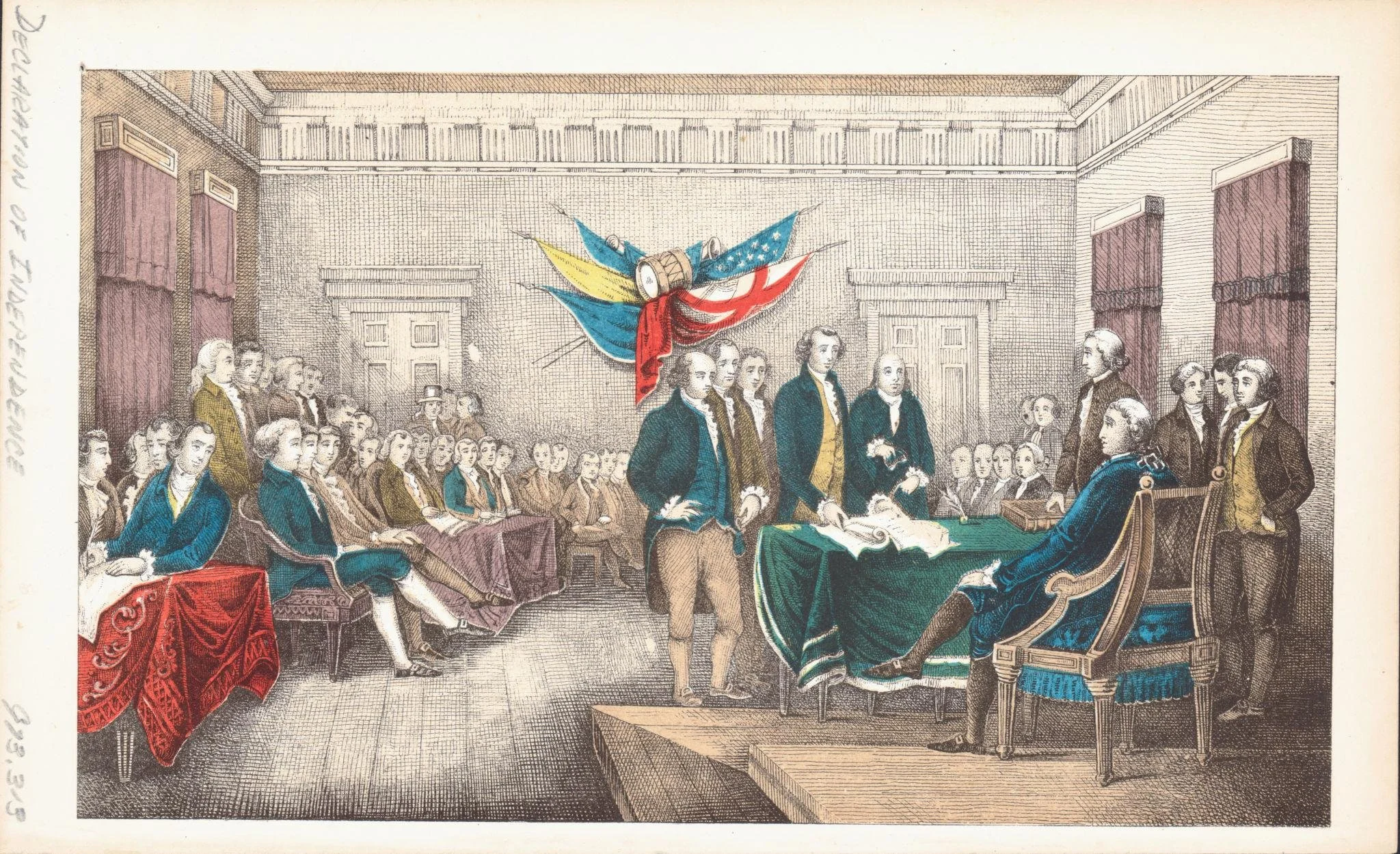
The argument that the American Revolution was fought to preserve slavery collapses the moment you examine the people who actually signed the Declaration. These were not abstract forces or anonymous elites. They were individuals who placed their names on a document that, if the war failed, would have guaranteed their execution for treason. Whatever else motivated them, cowardice and convenience were not among them.
The signers were not perfect men. Many owned slaves. That fact should not be hidden or softened. But acknowledging that reality does not require us to invent motives that are unsupported by evidence. Owning slaves in the eighteenth century does not automatically mean the Revolution itself was about preserving slavery. Those are two very different claims, and modern discourse routinely pretends they are the same.
What is often ignored is that some of the same men who signed the Declaration later supported, introduced, or voted for measures that restricted slavery, limited the slave trade, or laid the groundwork for its eventual abolition. That contradiction makes them human, not fraudulent. History is full of people who lived inside moral systems they did not fully escape but still helped undermine.
The Declaration itself is the clearest rebuttal to the idea that the Revolution was a pro-slavery project. Its core claim is not economic protectionism or racial hierarchy. It is that legitimate government derives its authority from the consent of the governed, and that people possess inherent rights that no ruler may revoke. Those ideas were explosive in a world built on monarchy, empire, and inherited status. They were also incompatible with slavery in the long run, which is exactly why abolitionist movements later anchored themselves in that language.
That does not absolve the founders of their failures. It explains why the document mattered.
The lesson here is not that America was born perfect. It is that America was born arguing with itself, and that argument was put into writing. The Declaration did not end injustice. It created a standard by which injustice could be named and challenged. That distinction matters.
When students are taught that the founding was nothing more than a cynical exercise in oppression, they are taught something dangerous. They are taught that principles do not matter, that words do not bind power, and that reform is merely a mask for control. That lesson does not create engaged citizens. It creates cynics who believe the system was rotten from the start and therefore not worth repairing.
A more honest education does something harder. It tells the truth about the men, their flaws, their compromises, and their courage. It allows students to wrestle with contradiction rather than be handed a verdict. It recognizes that progress is rarely born from purity, but from imperfect people committing themselves to ideas that outgrow them.
The signers of the Declaration did not finish the work they began. They never claimed they did. What they did was put a dangerous idea into the world and sign their names to it knowing the cost.
That is not a story of national mythmaking. It is a story of responsibility.
And it is one worth teaching honestly.
