When Slower Failure Is Rebranded as Progress
What Washington’s homelessness data and 2026 legislation really say about intent
By: Jessie Simmons
The Government Affairs Desk
Category: Homelessness
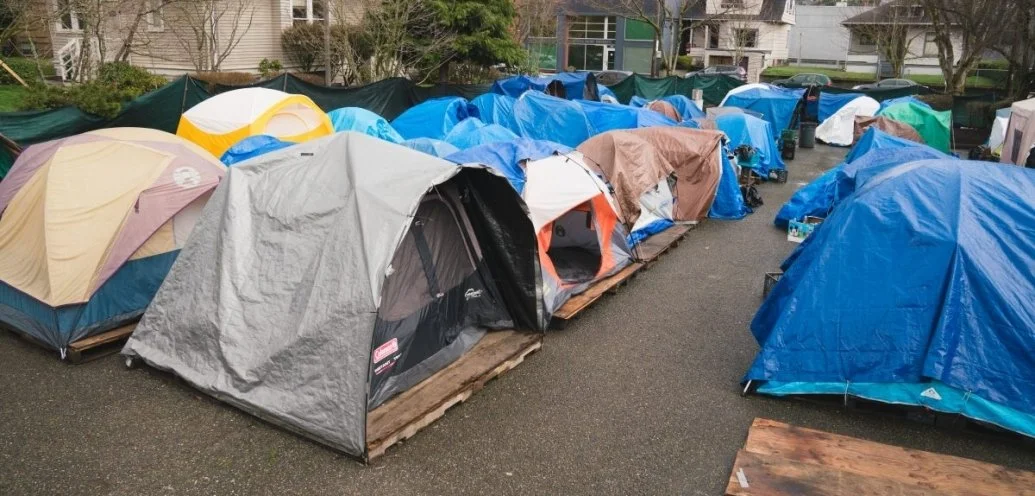
The Washington State Department of Commerce recently released its annual Point In Time count and Snapshot of Homelessness report with a headline designed to sound hopeful. The growth rate of homelessness has slowed. More action is still needed, officials say, but the implication is clear. Momentum is improving.
Look closer and a different story emerges. Homelessness is still rising. The state is spending more than ever. And the way leaders are framing the data suggests something deeper than optimism. It suggests Washington may no longer believe homelessness can be solved, only managed.
That shift matters. Because when government quietly redefines success, it also quietly accepts failure.
The numbers do not show improvement
Commerce’s own data tells the story. On January 30, 2025, 22,173 people were counted as experiencing homelessness in Washington during the Point In Time count, excluding King County’s unsheltered population. That is a 4.4 percent increase from 2024 and a 25 percent increase since 2022.
The broader Snapshot of Homelessness, which uses administrative data from multiple state agencies and includes King County, estimates 158,791 people were homeless or unstably housed in January 2025. That figure is higher than 2024 and nearly nine percent higher than 2022.
Homelessness is not stabilizing. It is not declining. It is still growing.
The only thing that has changed is the slope of the line.
Why slower growth is being framed as success
The Commerce press release repeatedly emphasizes three themes. Slower growth. Historic investment. Improved data.
What it does not emphasize is reduction.
There is no claim that fewer people are homeless. There is no benchmark for when the number should fall. There is no timeline for reversing the trend. Instead, the focus is on inputs and process. How much money was invested. How many programs are funded. How comprehensive the data has become.
This is not accidental messaging. It reflects a deeper shift in how the problem is being approached.
When governments believe a crisis is solvable, they set targets for reduction and timelines for results. When they do not, they emphasize system capacity, readiness, and mitigation. Washington’s homelessness strategy now looks far more like the second.
Legislative intent tells the same story
This reframing aligns closely with what is actually being proposed in the 2026 legislative session.
A review of the prefiled bills related to homelessness, housing stability, and human services reveals a consistent pattern. The bills overwhelmingly focus on expanding service systems, stabilizing provider capacity, improving coordination, refining eligibility, and strengthening administrative infrastructure.
These proposals assume a permanently large population in need of services. They are designed to manage flow, reduce harm, and maintain continuity. They are not designed around a theory of rapid or even medium term reduction.
What is largely missing are bills that would attack the upstream drivers of homelessness at scale. There is no serious push to enforce housing reforms against local obstruction. There are no hard consequences for jurisdictions that delay housing production or re add cost through implementation. There is no systemic reform of utility connection timing, permitting delay, or litigation risk that drives housing scarcity. There are no outcome based requirements tying homelessness funding to demonstrated net exits.
The absence is telling. Legislatures show what they believe is possible by what they prioritize. Washington’s Legislature is prioritizing stewardship of a large system, not dismantling the conditions that feed it.
Spending more while expecting less
Commerce highlights that the Legislature invested 1.8 billion dollars in housing and homelessness programs for the 2025–27 biennium. That number is real. It is also revealing.
When massive spending increases coincide with continued growth in homelessness, governments typically face a choice. They can change strategy or change expectations.
Washington appears to be doing the latter.
Instead of asking why homelessness continues to rise despite unprecedented investment, the state is adjusting the narrative. Growth is still bad, but slower growth is now presented as evidence that the approach is working.
That is a dangerous precedent. Because once slower deterioration is accepted as success, there is no longer pressure to change course.
Data refinement does not equal progress
The Commerce release also spends significant time explaining methodology. The Point In Time count is influenced by weather, shelter availability, volunteer participation, and counting practices. That is true. The Snapshot report is more comprehensive and consistent. That is also true.
But methodological rigor does not change lived reality.
Excluding King County’s unsheltered population from the 2025 PIT results may improve year over year consistency, but it also removes visibility into the most severe form of homelessness in the state. Historically, King County accounts for roughly half of Washington’s unsheltered population.
When the largest component of the problem is removed from the headline numbers, optimism becomes easier. But people living outside do not experience homelessness differently because of data adjustments.
Managing homelessness versus ending it
Taken together, the data framing, the legislative posture, and the budget priorities point in the same direction.
Washington is no longer acting like a state that believes homelessness can be meaningfully reduced in the near term. It is acting like a state that believes homelessness is a chronic condition to be administered indefinitely.
That does not mean policymakers are indifferent. Many are deeply committed to harm reduction and humanitarian response. But commitment to care is not the same as commitment to resolution.
As long as housing remains scarce and expensive, as long as regulatory barriers slow production, as long as energy and transportation costs strain household budgets, and as long as behavioral health systems lack throughput, people will continue to fall into homelessness faster than the system can move them out.
Slowing the rate of increase without reducing inflow is not success. It is triage.
The risk of accepting a lower bar
Redefining success as slower growth carries consequences.
It normalizes high levels of homelessness. It lowers public expectations. It entrenches permanent emergency response systems. And it shifts accountability away from outcomes and toward process.
Most importantly, it signals resignation.
If Washington no longer believes homelessness can be solved, it owes the public honesty about that conclusion. What it cannot do is quietly redefine failure as progress and expect trust to follow.
The uncomfortable truth
Washington’s homelessness data does not show improvement. It shows a state spending more money to slow, but not reverse, a worsening problem.
The 2026 legislative agenda reinforces that reality. It invests in permanence, not resolution. It funds systems, not exits. It manages consequences rather than dismantling causes.
Calling that progress may be politically convenient. It is not policy success.
Until Washington is willing to measure success by fewer people without homes, rather than by how slowly the number grows, homelessness will remain an emergency with no endpoint.
And pretending otherwise only ensures that the crisis becomes permanent.
