by: Jessie Simmons
Category: Government Power, Civil Liberties
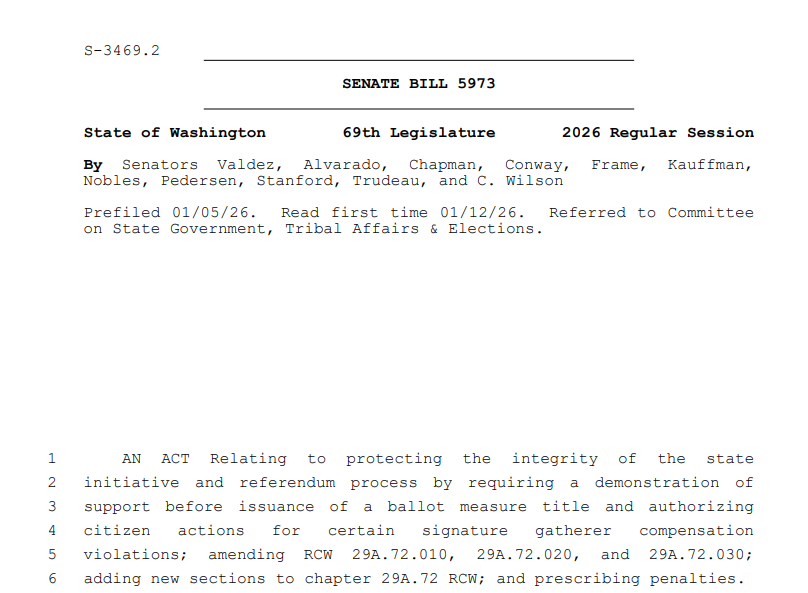
Washington lawmakers are advancing a bill they claim is about protecting the integrity of the initiative process. The language is careful. The framing is familiar. Prevent fraud. Reduce abuse. Improve efficiency. But when you strip away the justification and look at what this bill actually does, it becomes clear this is not a neutral reform. It is a structural change that shifts power away from citizens and toward the institutions already in control.
That should concern everyone, regardless of party.
The initiative process exists for one reason. It is a tool for the people when the legislature refuses to act or no longer reflects public will. It is not designed to be convenient for those in power. It is designed to allow ideas outside the political consensus to force their way into public debate.
This bill undermines that purpose.
For the first time, citizens would be required to prove their idea is viable before the state will even acknowledge it. No ballot title. No serial number. No formal entry into the process unless the government first determines you have gathered enough verified support.
That is not a minor procedural tweak. That is a philosophical shift.
Under the system voters were promised, initiatives live or die based on whether people choose to sign. Under this bill, initiatives can die before the public ever sees them, not because voters rejected them, but because the state never allowed them to begin. Supporters argue this only weeds out unserious proposals. That sounds reasonable until you remember that nearly every major reform in history started as something the establishment dismissed. The initiative process exists precisely to bypass that kind of gatekeeping.
Context matters here.
Washington has been governed by one party for nearly forty years. Committees, agencies, rulemaking bodies, and executive offices largely move in the same direction. That does not automatically make policies wrong, but it does mean dissenting voices have fewer paths to influence. In that environment, the initiative process is not a luxury. It is a pressure valve. It is how minority viewpoints force issues onto the agenda when legislative doors are closed. It is how citizens push back when the system stops listening. This bill narrows that outlet.
It raises the cost of participation. It shifts risk earlier in the process. It inserts administrative discretion before public debate even begins. And it does so in a way that favors well funded and institutionally connected actors while making grassroots and oppositional efforts harder. That is not neutral. It is a redistribution of power.
There is also an uncomfortable hypocrisy that deserves to be named.
The same political leaders backing this bill frequently position themselves as defenders of democracy. They warn about voter suppression. They argue that democracy erodes when participation is limited, when barriers are raised, when systems favor insiders over ordinary people. Those warnings are valid. Which makes this bill deeply troubling. Democracy does not usually disappear through bans or dramatic crackdowns. It erodes slowly, through reasonable sounding procedural changes that always seem justified on their own. A new threshold here. An added requirement there. A small shift in who gets to decide. Each step can be defended. Together, they change the system. When the government decides which ideas are allowed to enter the process, democracy becomes conditional. When citizens must clear state approval before petitioning power, democracy becomes managed. When opposition tools are narrowed by those who already hold power, skepticism is not only warranted, it is necessary.
If lawmakers believe bad ideas should lose, they should trust voters to reject them. If fraud exists, it should be addressed directly. But limiting access to the initiative process is not protecting democracy. It is controlling it. And anyone who votes to limit democratic participation while claiming to defend democracy should be scrutinized closely. Not because of motive, but because power has incentives, and history is very clear about how freedom erodes.
It does not happen overnight. It happens when those in power decide that fewer voices would be easier to manage.
That is what this bill does.
